 Szeto Handyman
Why bath fans matter
- English
- Mandarin
- Cantonese Chinese
Showers put a lot of moisture into a small room. A working fan pulls it out before it settles on walls, ceilings and mirrors. When the fan is weak or noisy, people stop running it, and peeling paint, mildew spots and swollen door frames follow.
Signs a fan needs replacing
- The mirror stays fogged long after a shower.
- The fan rattles, hums or grinds.
- Holding a tissue to the grille, it barely moves.
- Paint peels on the ceiling near the shower.
- The fan does not run at all.
- Wide shotThe whole fixture and the space around it.
- Close-upLabels, model numbers, the leak or break.
- ConnectionsValves, pipes, wires or brackets.
- Send itText the photos with your cross street.
Replacement options
Many fan makers offer replacement motor and grille kits that fit their older housings, which avoids cutting the ceiling. Other upgrades use a new housing sized to fit the existing opening. Quieter fans have lower sone ratings, and higher airflow ratings move more air.
Fans with a humidity sensor or timer switch keep running until the air is dry. Fan-light combinations replace a separate light.
Duct and exhaust
A fan is only as good as its duct. Crushed, disconnected or long flexible ducts cut airflow. Fans should exhaust to the outside, not into the attic.
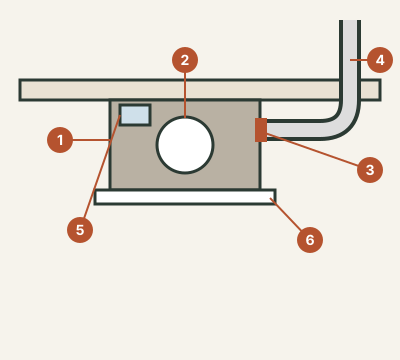
- Housing fixed to the joist
- Motor and fan wheel
- Damper flap at the duct port
- Duct running outside
- Motor plug inside the housing
- Grille
We check the duct connection at the fan and as far as we can reach. If the duct needs rerouting through the attic to a new roof or wall cap, we tell you first; roof penetrations are not work we take on.
Scope
Sizing a bath fan
Fan airflow is rated in cubic feet per minute. A common rule of thumb for small bathrooms is roughly one CFM per square foot of floor area, with more for larger rooms, high ceilings or a separate shower and tub. Long or bent duct runs reduce real airflow, so a fan rated a bit above the minimum helps.
- Valley-wide
- Bath fan jobs in houses and ADUs
Sones measure noise; lower is quieter. A quiet fan gets used, which matters more than a strong one that stays off.
- Pull the grilleLook for the label inside the housing.
- Measure the housingWidth and length decide which kits fit.
- Find the ductNote where it exits: roof, wall or soffit.
- Photo and textSend the label, housing and grille.
Controls that keep fans running
Most moisture problems come from turning the fan off too soon. A countdown timer switch lets you set the fan to run after you leave. A humidity-sensing fan or switch turns on when moisture rises and off when it drops.
A fan-light combination wired to separate switches lets the fan run without the light. All of these install in the existing switch box when there is room and the right wires.
Mildew and paint after fan replacement
Once the fan works, clean mildew spots with a bathroom cleaner and let the area dry. Peeling ceiling paint can be scraped, primed with a mildew-resistant primer and repainted. If the drywall is soft or stained through, a patch may be needed. We can handle the patch and paint after the fan is replaced.
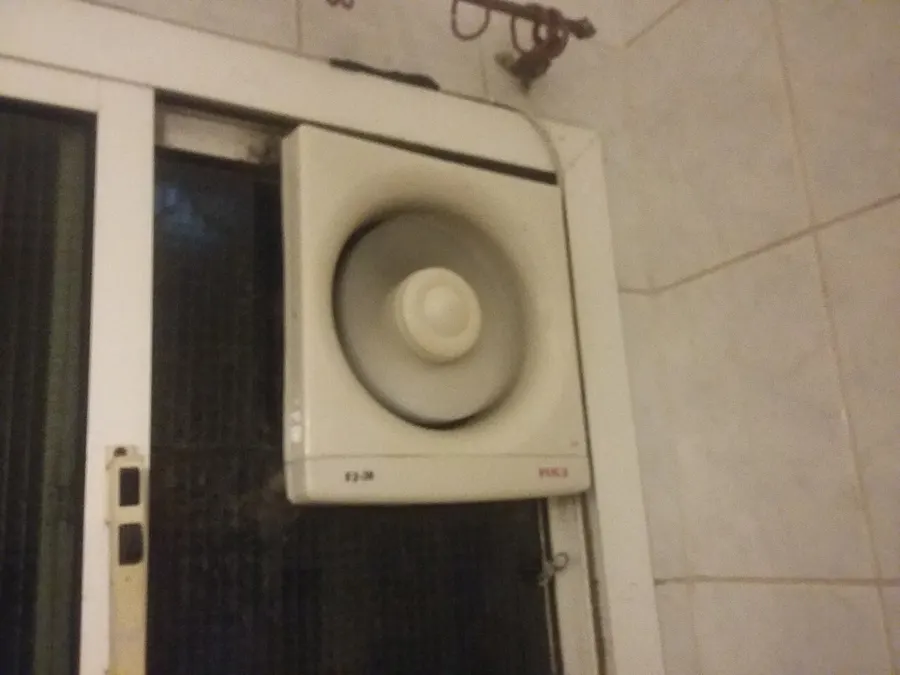
What to send
A photo of the grille, a photo with the grille removed showing the housing and any label, and a photo of the switch. If you can see the duct in the attic, a photo helps too.
More questions
Can a bath fan be too strong? Very large fans in small, tight bathrooms can pull air from other parts of the house. Sizing to the room avoids that.
Should the fan run during the shower? Yes, and for a while after.
Older fans in valley homes
- A wide shot
- Close-ups of the bath fan
- Closest intersection
Many bathrooms in midcentury tract homes have small fans in the ceiling that were never strong, ducted with thin flexible pipe that has sagged or pulled loose in the attic over the decades. Some vent through a wall cap that is clogged with lint or bird nests. A new fan in a housing like that underperforms, so we look at the whole path.
Clearing a wall cap, reconnecting a loose duct at the fan collar and sealing it with foil tape are part of a good replacement. Rigid or semi-rigid duct with fewer bends moves more air than a long sagging flex run. If the attic is too tight to reach the duct safely, we note it and work from the bathroom side.
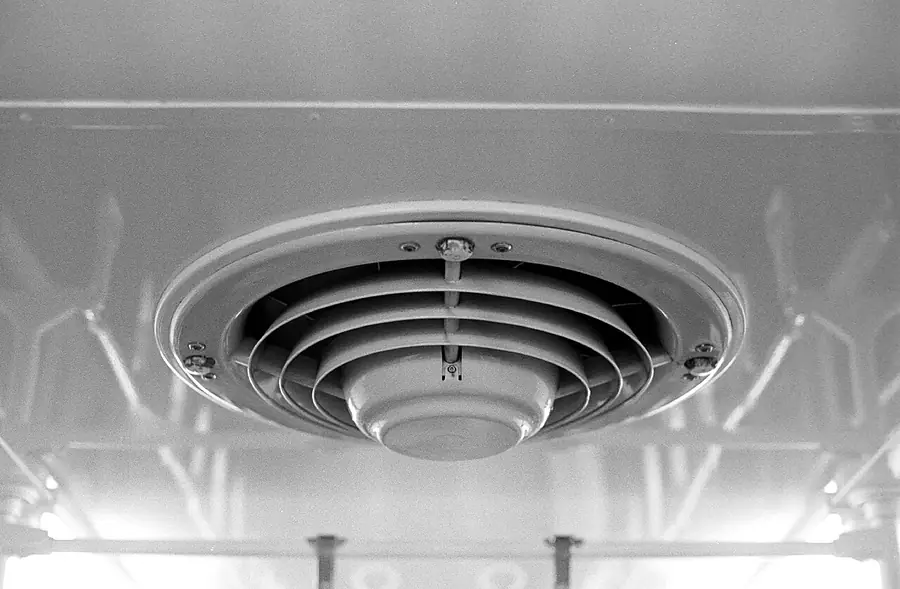
What a visit looks like
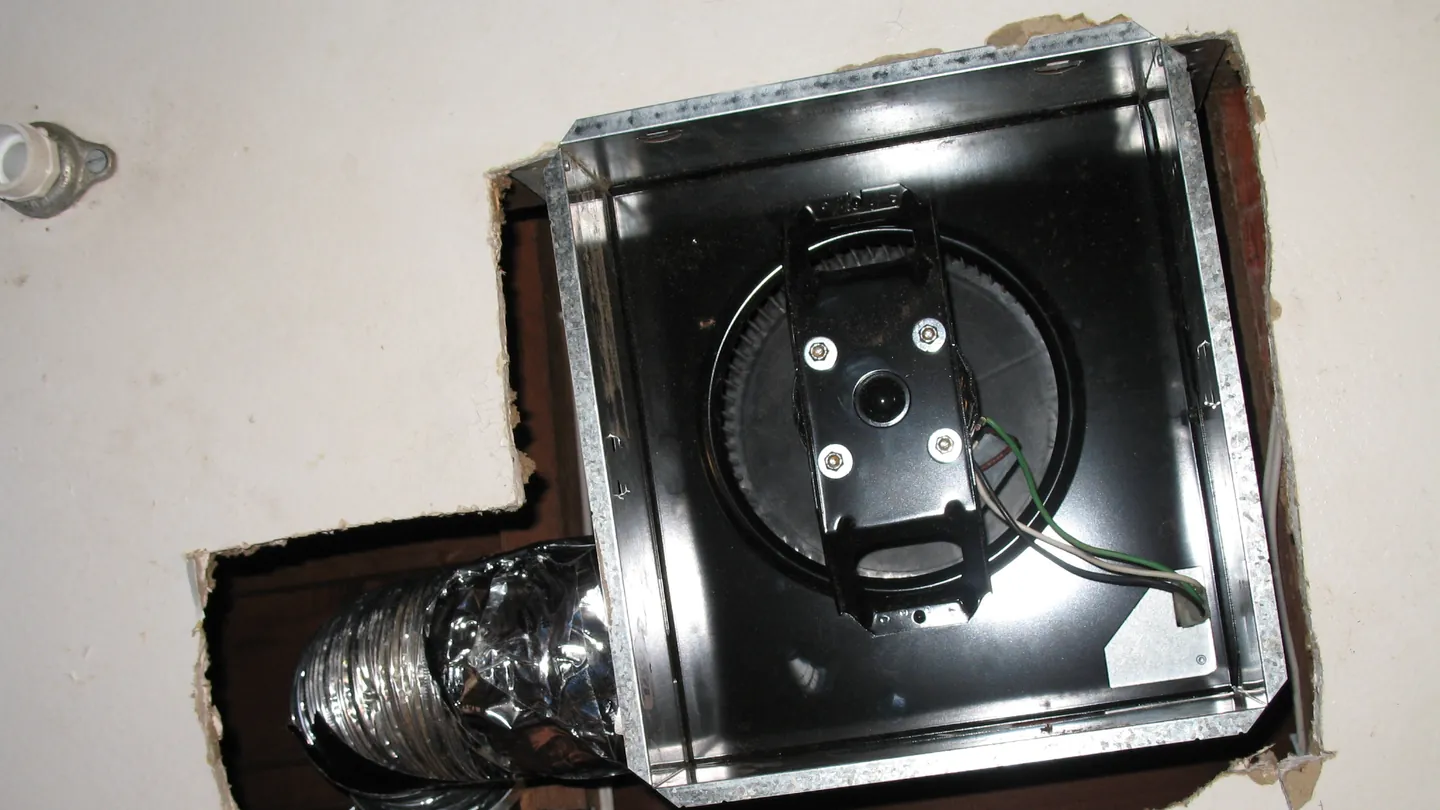
We turn off the breaker, take down the grille, and unplug or disconnect the motor. If a motor kit fits the housing, we install it and test. If the housing must change, we cut the old one free, fit the new housing to the joists in the same opening, connect the duct with a new collar and foil tape, and wire it to the existing cable.
Then we install the grille, run the fan and check airflow with a tissue test. We clean up insulation and dust that falls during the work.
More questions
- A picture or two
- We quote the bath fan
- Checked when done
Can you add a light to my fan? A fan-light combination unit can replace a fan-only unit when the opening and wiring allow.
- Motor and grille swaps in the same housing
- Same-size fan replacements
- Reconnecting the duct to the housing
- Fan and light combo swaps on existing wiring
- Cutting a new ceiling opening
- New duct runs through the roof
- Adding a switch or circuit
- Signs of heat or scorch marks
Grille cleaning between visits
Pop the grille down every few months and wash it in warm soapy water. Lint and hair packed into the louvers choke airflow long before the motor wears out, and a clean grille often quiets a rattle on its own.
Related guide: Troubleshooting dead outlets and GFCI resets.
Photo checklist
- The fan grille on the ceiling
- The fan with the grille off, if easy
- The switch that runs it
- Any mold or peeling paint on the ceiling
Questions we get
Can you replace just the motor?
Often, if the maker offers a kit for your housing.
How long should I run the fan?
Long enough to clear moisture after a shower. A timer switch helps.
Can a fan go in a bathroom without one?
That needs a new opening, wiring and duct, which is not work we take on.
- Just the bath fan
- Bundle small tasks
Why does my fan drip?
Condensation in an uninsulated duct, or a poorly sealed roof cap. Insulated duct helps.
Do you clean bath fans?
Yes. Dust on the grille and blades cuts airflow; cleaning helps an older fan that still runs well.
How do I know if my fan works?
Hold a single square of tissue near the grille while it runs. If it is not pulled up, airflow is weak.
- A text on the way to the bath fan
- Floors covered, tidy after
Why is my fan so loud?
Worn motor bearings or a loose housing. Newer quiet models help.
How long should it run after a shower?
Long enough to clear the mirror and walls; a timer switch makes this easy.
Can the fan get a light?
Combination fan-lights can replace a fan on the existing wiring if it suits.
- Mon–Sat 8:30 AM–7 PM
- Closed Sunday
- Texts usually answered within the hour
Why does my bath fan get so dusty?
Fans pull lint and dust with the moist air. Cleaning the grille and blades keeps airflow up.
Can a bath fan vent into the attic?
It should vent to the outside through a duct. Moist air left in the attic can cause mold and rot.
Do bath fans use a lot of electricity?
No. Most draw about as much as a small light bulb.
- Tenants can open up
- A code for the bath fan visit
Get a quote for bathroom exhaust fan replacement
Text a photo and your cross street. Free estimates, and most texts are answered within the hour.
Good to fix along with the bath fan
Customers who book bath fan work often add vanity lights and LED mirrors or shower cartridge replacement. Other pages that help: patching holes in walls and ceilings, ceiling fan installation and replacement, light fixture replacement.
Repairs related to the bath fan
Also done in West Covina, Covina, Baldwin Park, Azusa, Temple City, Sierra Madre, Monrovia, Duarte, Irwindale and Glendora.