 Szeto Handyman
Where rot starts
- Mon–Sat 8:30 AM–7 PM
- Closed Sunday
- Texts usually answered within the hour.
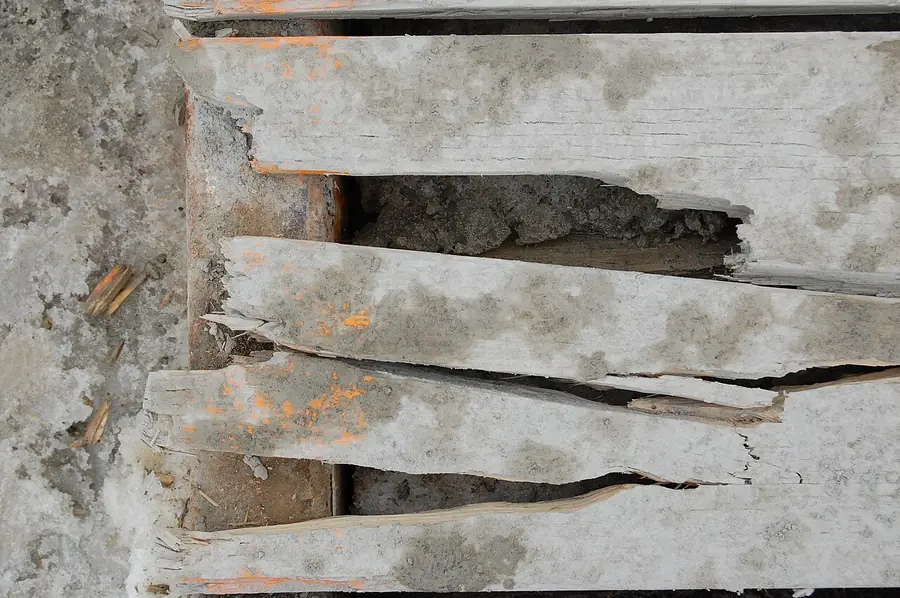
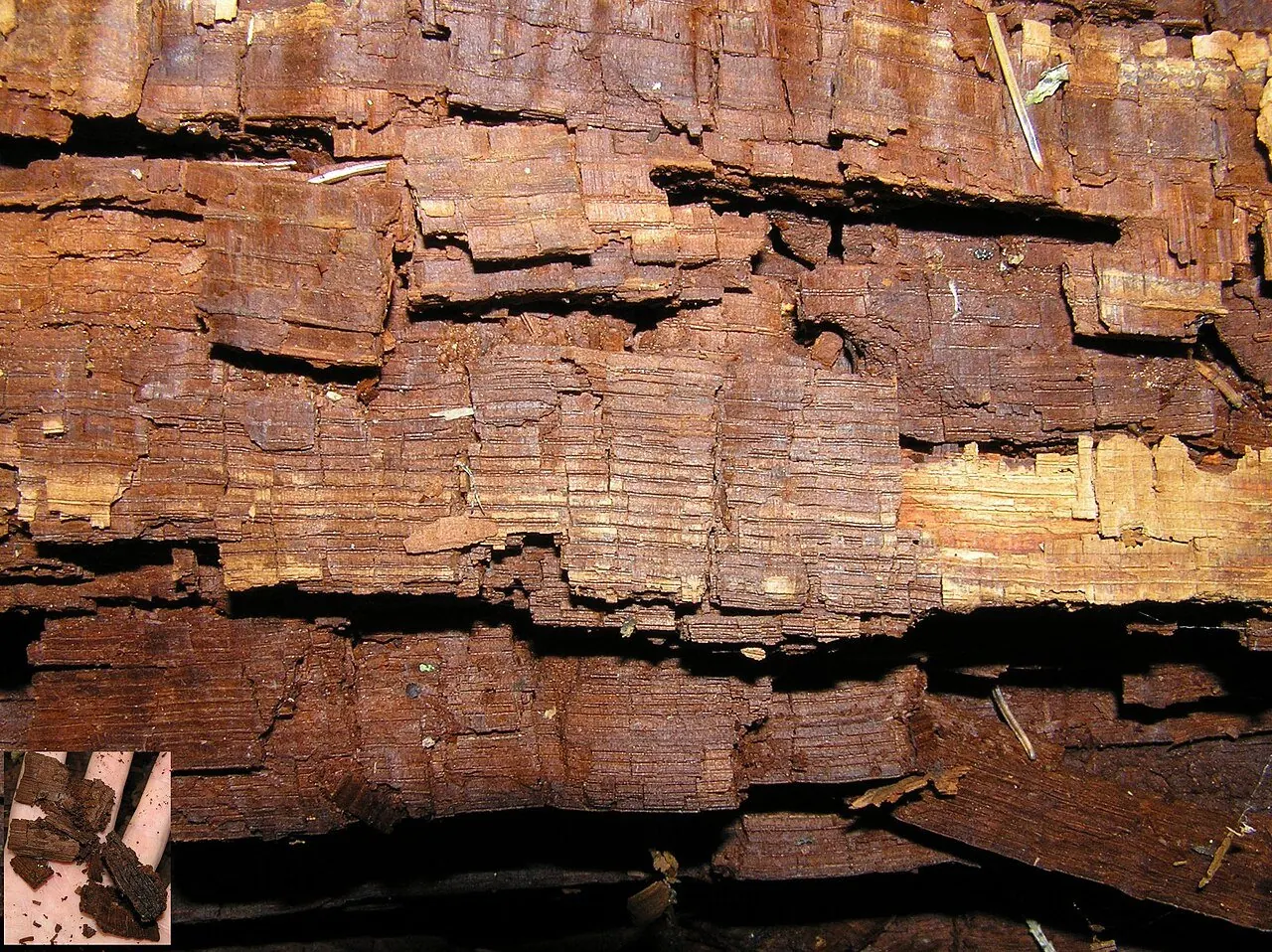
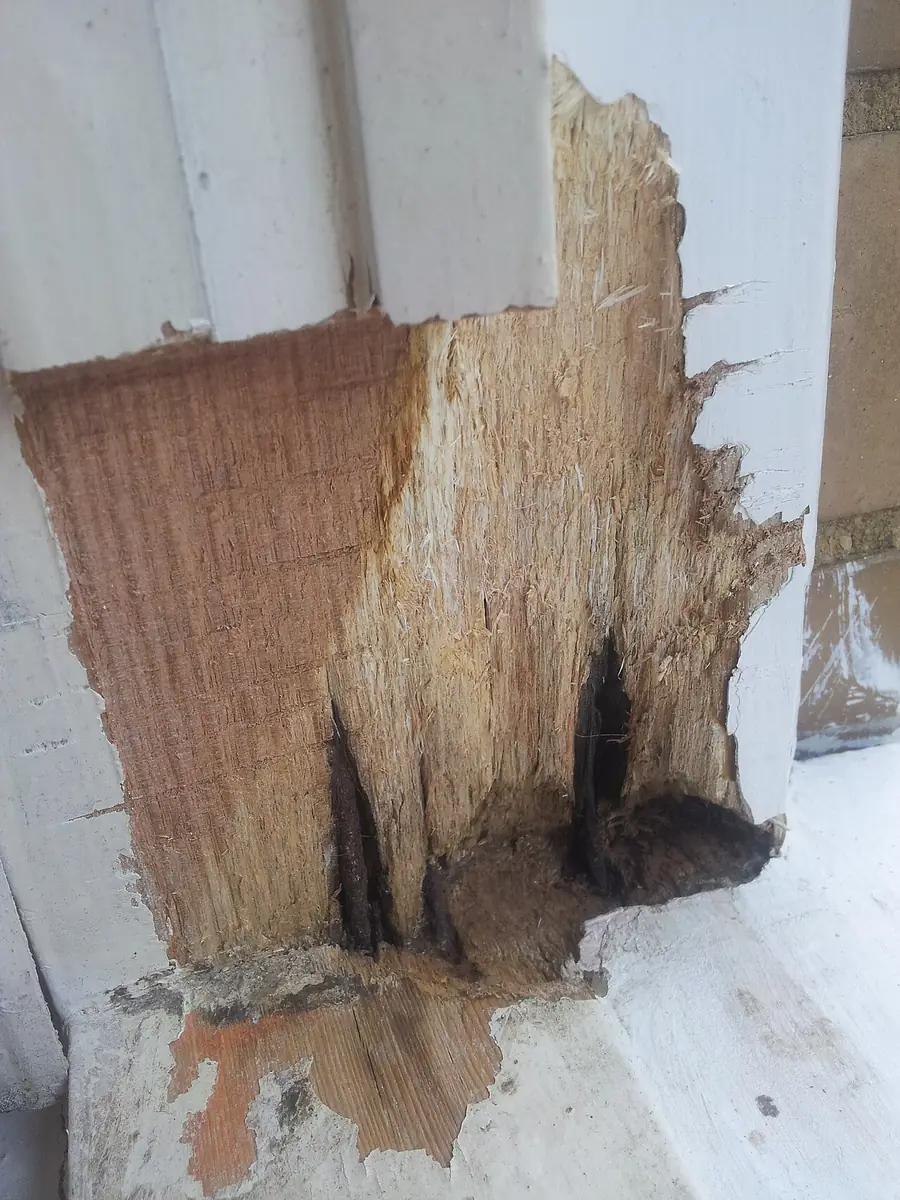
Rot needs water and wood that stays damp. Even in a dry climate, it shows up where water sits: the bottoms of door jambs next to the threshold, window sills that slope the wrong way, fascia boards behind clogged gutters, posts set in soil, and trim behind sprinklers that hit the wall every morning.
Peeling paint is often the first sign. Push a screwdriver into suspect wood; if it sinks in easily, the wood is soft.
Fix the water first
Patching rot without stopping the water means it comes back. We look at why the wood got wet: a sprinkler head aimed at the house, a gutter overflowing, failed caulk at a joint, or a missing drip edge. Small fixes such as redirecting a sprinkler or re-caulking a joint are part of the job. A roof leak has to be stopped first.
Epoxy repair
When the rot is a small area in a larger piece, we cut out the soft wood, treat the edges with a wood hardener, and fill with a two-part epoxy filler. Once cured, it sands, shapes and paints like wood. This keeps the original trim, which matters on older homes with profiles that are hard to match.
Replacing pieces
- A neighbor works too
- Keys for the rotted wood visit
When rot goes deep, the piece is replaced. For door jambs, the bottom section can be cut out and a new piece spliced in, rather than replacing the whole frame. For fascia and trim, we match the size and profile and prime all sides before installing, including the cut ends.
Primed and painted wood resists water far better than bare wood. Composite trim and PVC are good options in spots that stay wet.
Termites or rot?
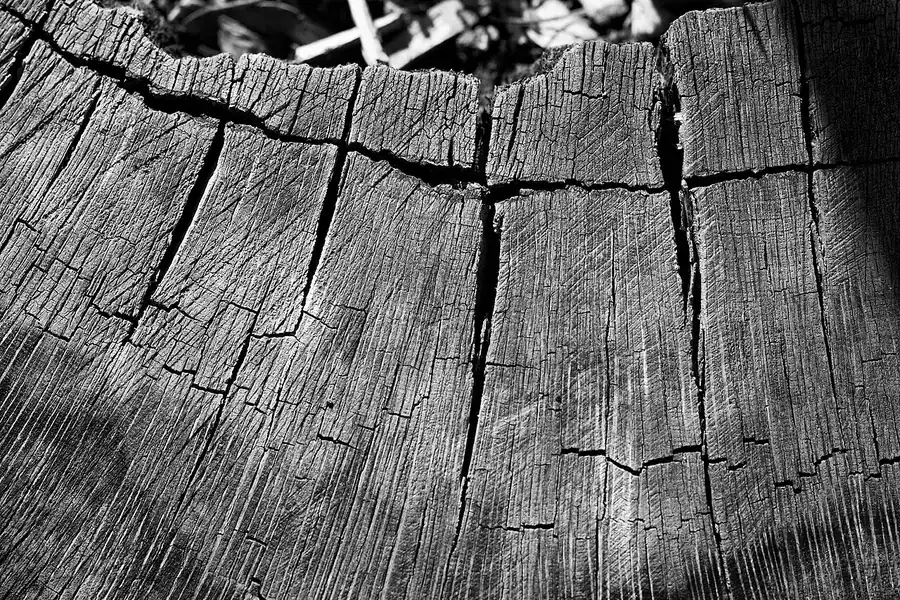
Termite damage and rot can look similar. Drywood termites leave small pellets; subterranean termites leave mud tubes. If we find signs of termites, we stop and show you what we found before repair, because patching over an active infestation wastes money.
The gutter above the rot
Trim that rots along the eave line usually has a gutter problem over it. A joint that drips, a length that sags and spills in heavy rain, or a downspout that let go at the elbow keeps the wood below wet. Gutter repair can go on the same visit: we reseal the joint, rehang the low run so it drains to the outlet and reconnect the downspout. Roof work goes to a roofer.
- Probe the woodSoft spots give under a screwdriver tip.
- Find the waterLook above it for the leak or splash.
- Map the edgesMark where the wood turns firm again.
- Photo and textA wide shot and the soft spot close up.
When it is structural
Rot in a deck joist, a porch post that carries a roof, or a wall sill plate is structural. Those repairs are not work we take on. We will tell you if what we find is past trim work.
Painting the repair
Every repair is primed and painted to match or as close as possible. A full side of a house may look patchy until it is painted, which we can quote.
Common spots in valley homes
In the San Gabriel Valley, the usual trouble spots are the bottom of front and back door jambs, the sills of windows on the sprinkler side, the ends of rafter tails and fascia near downspouts, and the base of wood porch posts. Older ranch homes and bungalows with original wood trim get a check every few years.
Moisture readings
A moisture meter tells us whether the wood is still damp before we patch it. Wood that is wet when filled will keep rotting underneath. If it reads wet, we fix the water source and let it dry before patching.
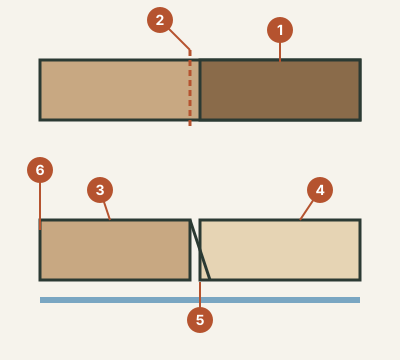
- Rotted section
- Cut line, back into sound wood
- Original trim that stays
- New piece
- Angled joint between old and new
- Cut ends primed before paint
Choosing new trim
Primed finger-jointed pine is fine indoors, but outdoors it can swell if paint fails. For exterior trim in wet spots, we often use solid primed wood, cedar, or PVC trim, which does not rot. PVC trim takes paint once primed and cleaned.
- PrepRemove loose or damaged material.
- RepairPatch, fill or reset the piece.
- Build upThin layers, each left to set.
- FinishSand, seal or paint to blend in.
Keeping it from coming back
Paint is the main protection. Repaint trim when paint cracks or peels. Re-caulk joints every few years.
Keep gutters clean and turn sprinklers away from walls. A yearly walk around the house to look at paint and caulk catches small problems before they turn into rot.
Before you sell
Home inspectors probe trim and frames for soft wood. Fixing it before listing avoids a repair request later, and photos of the repair help the buyer feel confident.
- Small fixes and repairs
- Swaps on existing mounts
- Patching and adjusting
- Hardware, trim and assembly
- Structural framing changes
- Roofing and foundations
- New openings in walls
- Whole-room rebuilds
How we price
Rot repair is quoted after a look, because the soft area is often larger than it seems. We probe the wood around the visible damage and give a price for the full repair before starting. If we find more once a piece comes off, we stop and show you before going further.
Window sills
Sills should slope away from the window so water drains off. When they slope inward or sit flat, water sits and rots them. A replacement sill can be set with a proper slope, or a sloped cap added on top.
Garage door jambs
The wood jambs around garage doors rot at the bottom where water collects. We replace the bottom section and seal it, and add a stop seal so rain does not blow in.
Fences and gates
The same rot shows up on fence posts and gate frames. See our fence and gate page for those repairs.
- Wide shotThe whole fixture and the space around it.
- Close-upLabels, model numbers, the leak or break.
- ConnectionsValves, pipes, wires or brackets.
- Send itText the photos with your cross street.
Gutters and downspouts
A downspout that dumps water against a wall soaks the trim and the siding there. Adding an extension or a splash block moves the water away, and we do it while repairing the rot nearby.
Painting schedule
Exterior paint in the valley sun tends to fail first on south and west walls. Repainting trim on those sides more often than the rest of the house is a cheap way to keep rot away. We can touch up trim during a rot repair visit so the paint on that side is all fresh at once.
Related guide: What changes the cost of drywall and surface repairs.
Questions we get
- Quotes cost nothing
- The rotted wood quote holds
Can you repair a rotted door frame?
Yes, usually by splicing a new section at the bottom.
Is epoxy filler durable?
Yes, when painted and kept dry.
Do you check for termites?
We point out signs we notice, such as frass or mud tubes.
- Parts for the rotted wood, priced first
- Bought one? Fine
Can you replace fascia?
Yes, single-story fascia and trim.
Will you paint it?
Yes, primed and painted.
Does wood rot stop when the wood dries?
The fungus goes dormant in dry wood but can start again if moisture returns, and the damaged wood stays weak. Rotted wood is removed or consolidated and the water source fixed.
- Send us photos
- Ring us about the rotted wood
What causes wood rot?
Fungi that grow in wood that stays damp, often from leaks, poor drainage, missing paint or caulk, or wood touching soil.
Can wood rot spread?
It spreads through damp wood and into neighboring damp wood. Dry wood nearby is not affected, so stopping the moisture is the key.
- English
- Mandarin Chinese
- Cantonese
Get a quote for wood rot repair
Text a photo and your cross street. Free estimates, and most texts are answered within the hour.
Good to fix along with the rotted wood
While we work on the rotted wood, we can also look at door adjustments and slab swaps and deck board and railing repair. Problem turns out not to be the rotted wood? Read fence and gate repair, window replacement in existing frames or drywall and plaster repair.
Repairs related to the rotted wood
Service area for this job: West Covina, Covina, Baldwin Park, Azusa, Temple City, Sierra Madre, Monrovia, Duarte, Irwindale and Glendora.